

Automotive simulator is a complex solution for model-based system calculations of dynamic characteristics for automotive components and assemblies in real-time. To increase efficiency and reduce risk, engineers can test ECUs virtually, using software models to simulate various components. All automotive components present in the simulator can be tested both independently and in combination with each other.
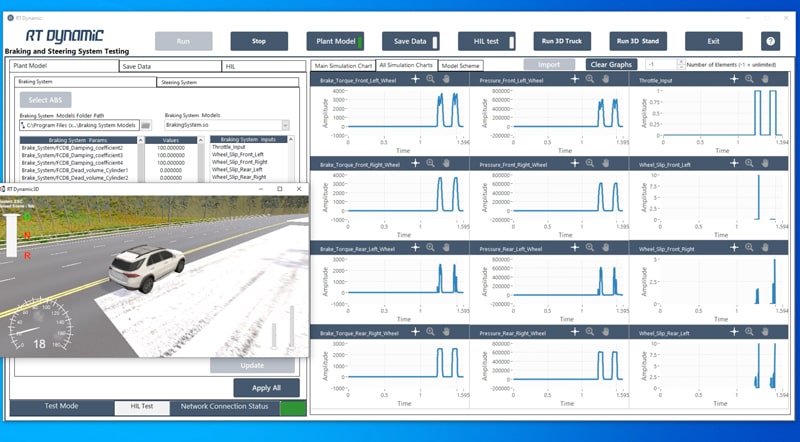
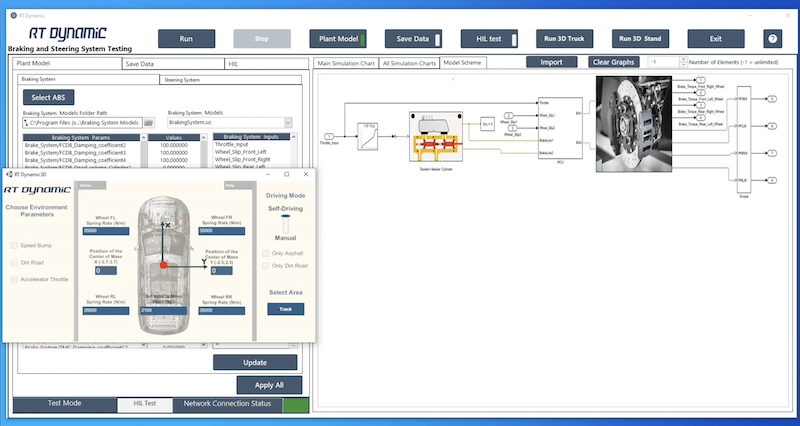
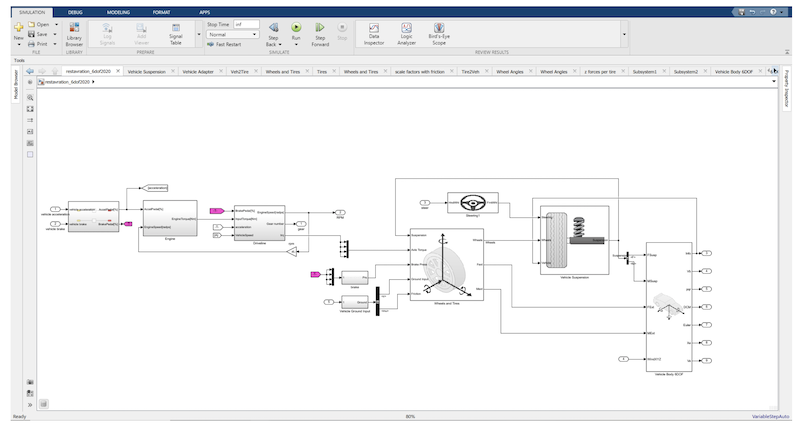
RT Dynamic provides an advanced six degrees-of-freedom (DOF) rigid two-axle vehicle body model to accurately calculate longitudinal, lateral, vertical, pitch, roll, and yaw motion vehicle dynamics. This model includes calculations for the rigid body vehicle dynamics, wind drag, inertial load, and coordinate transformations, as well as a library of pre-built vehicle models that can be used to quickly construct complex vehicle models. Additionally, the 6DOF model offers improved reliability and accuracy of simulations, allowing for more accurate predictions of vehicle performance.
RT Dynamics provides an API that enables developers to create models of vehicle components like engines, transmissions, brakes, and steering systems in various programming and modeling environments. The API includes features such as a real-time dynamics processor and a graphical user interface for building, configuring, and simulating the components. Additionally, RT Dynamics offers a library of pre-built components that can be used to quickly construct vehicle models.
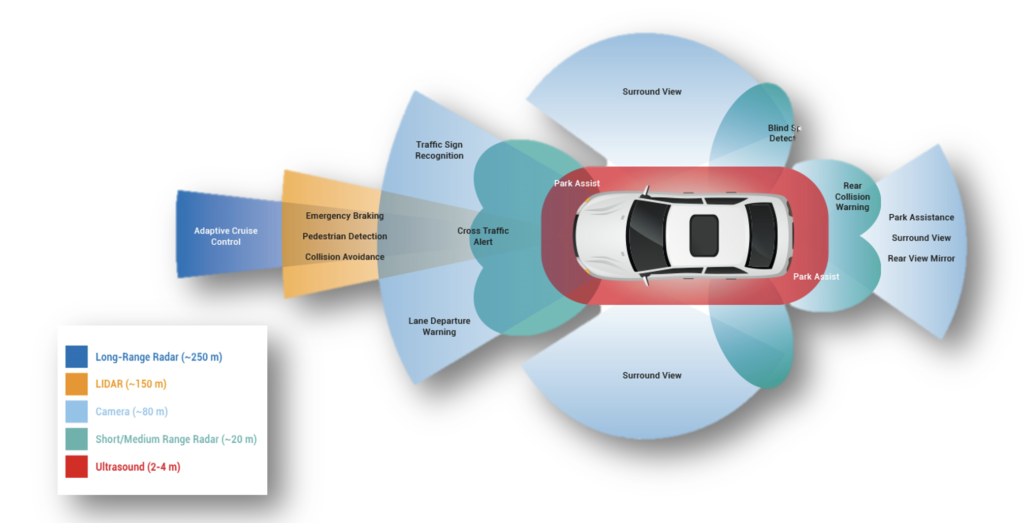
Our ADAS concept represents a paradigm shift in intelligent system design, leveraging cutting-edge sensors and processors to deliver real-time insights and proactive assistance. Our ADAS concept transcends traditional applications, offering scalable solutions for diverse sectors including autonomous vehicles, industrial automation, and smart infrastructure. By pushing the boundaries of technological innovation, we empower industries to embrace a future where safety, efficiency, and sustainability converge seamlessly.
Sensor Integration: At the heart of our ADAS concept lies a sophisticated sensor network, including external cameras, internal driver monitoring systems (DMS), radars, lidar, ultrasonic sensors, and electromagnetic sensors. These sensors work synergistically to perceive and interpret the vehicle’s surroundings with unparalleled accuracy and reliability.
External Cameras: Equipped with high-resolution cameras, our ADAS system captures real-time visual data, including lane markings, traffic signs, and potential obstacles. The speed of processing camera streams ensures immediate responsiveness to changing road conditions, with data acquisition and analysis occurring within milliseconds.
Internal Cameras (DMS): Internal cameras monitor driver behavior, detecting signs of fatigue, distraction, or other critical states. This information is processed swiftly to alert the driver or trigger automated safety protocols, ensuring optimal driver awareness and safety at all times.
Radar Systems: Short-range radars monitor blind spots and parking situations within a range of 0.2 to 30 meters, offering precise object detection and collision avoidance capabilities. Long-range radars extend this capability up to 200 meters, providing adaptive cruise control and early warning systems for potential hazards ahead.
Lidar Technology: Utilizing advanced light detection and ranging (lidar) sensors, our ADAS concept achieves unparalleled object detection and spatial awareness. Lidar systems rapidly scan the environment, generating detailed 3D maps and identifying obstacles with exceptional accuracy. Real-time processing ensures immediate collision avoidance maneuvers and precise parking assistance.
Ultrasonic Sensors: Incorporating ultrasonic sensors enhances parking assistance functionalities, enabling automated and parallel parking maneuvers. These sensors also contribute to comprehensive blind spot monitoring, ensuring complete awareness of surrounding objects and vehicles.
Electromagnetic Sensors: Enhancing situational awareness, electromagnetic sensors detect and analyze environmental data, complementing other sensor inputs to provide a holistic view of the driving environment.
Speed of Data Processing. The efficiency of our ADAS system is reflected in its rapid data processing capabilities:
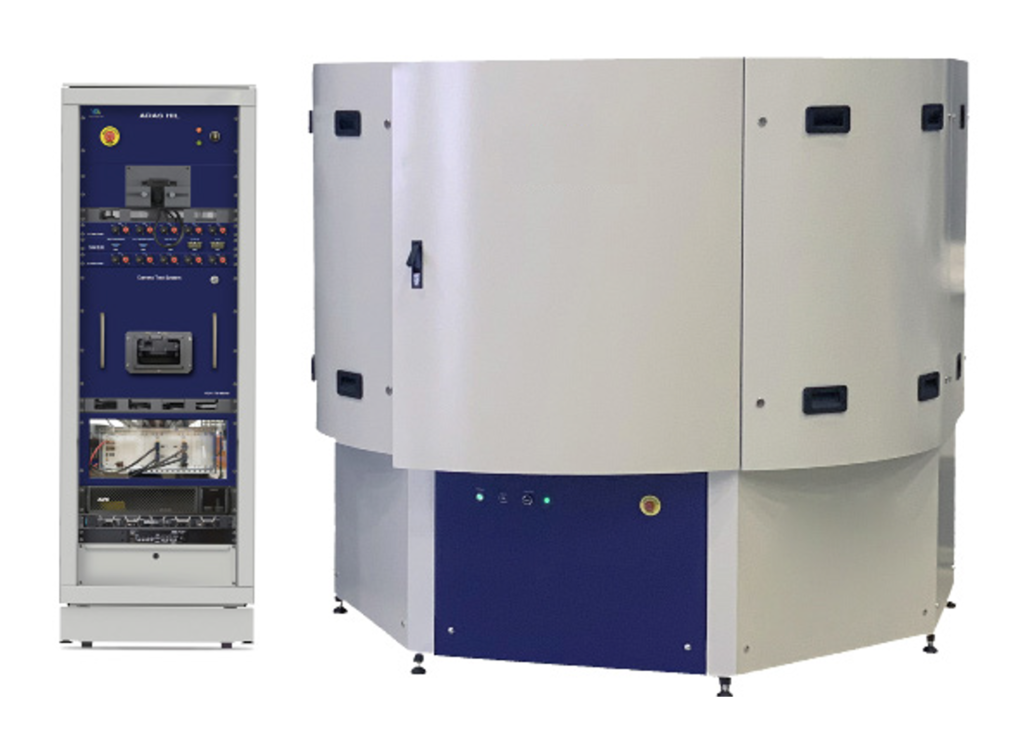
Our radar test system allows to make automotive radar V&V and Production test. It provides parametric measurements and simulating radar obstacles for 77 GHz and 79 GHz with 1 GHz and 4 GHz bandwidths.
Automotive Radar Target Simulator can be used for the:
▪ verification and validation of automotive radar sensor prototypes, engineering units;
▪ characterization of the automotive radar sensors before production;
▪ production of the automotive radar sensors;
▪ environment simulation for automotive radar sensors in closed-loop ADAS HIL systems;
▪ environment simulation for automotive radar sensors in System in the Loop emulations like Vehicle-in-the-Loop (VIL) systems.
With multiantenna configuration we provide Imaging radar testing feature. Test system includes radar target generator for multiple independent radar points generation, reconfigurable anechoic chambers with different far field configurations, angular and сartesian movement mechanics, radar alignement and calibration subsystems. Upon request, CATR also can be included in the system.
Following tests can be provided with radar test system:
▪ radar sensitivity and RCS characterization;
▪ radar range and resolution testing;
▪ radar angular resolution error and test;
▪ radar interference immunity testing;
▪ velocity and doppler characterization;
▪ radar chirp parametric measurements;
▪ car movement scenario generation;
▪ real time target generation for HIL/ADAS dynamic test.
With multiantenna option mention tests are used for Imaging automotive radars.
Radar test system supports automotive bus communication and can communicate real time with ECU-s, LiDARs and other sensors during the test or use restbus simulation, if required.